
Accessibility is frequently discussed during the planning stages of an event, often framed around what has been included, what adjustments have been considered, and how organisers intend to demonstrate that their event is open to all. Yet far less attention is given to the more complex and often less visible reality — what happens in the absence of meaningful accessibility, and how that absence shapes the experience of those attending.
In practice, inaccessibility rarely announces itself in obvious or measurable ways. It does not always result in formal complaints, nor does it consistently appear in post-event feedback. Instead, it presents quietly, woven into patterns of behaviour that can easily go unnoticed unless there is a conscious effort to recognise them.
It is seen in the family who arrives with genuine intention to stay for the duration of the event, only to leave within a short period of time when the environment becomes too overwhelming to manage. It is reflected in individuals who pause at the edge of a crowded space, carefully assessing whether they are able to cope with the sensory demands, before ultimately deciding not to enter at all. It is present in those who attend once, find the experience difficult or distressing, and make the decision not to return in future years.
Perhaps most significantly, it is evident in the absence of those who never attend in the first place.
These outcomes are not isolated, nor are they incidental. They represent a consistent and widespread pattern across public events, particularly those characterised by high levels of sensory input such as noise, crowd density, lighting and unpredictability. For a significant proportion of the population, these environments present genuine and substantial barriers to participation.
It is important to be clear that, in many cases, this exclusion is entirely unintentional. Event organisers are increasingly aware of the need to create inclusive environments and, in many instances, are already taking steps to improve accessibility. However, accessibility cannot be understood solely through visible or structural adjustments. While features such as step-free access, clear signage and physical layout remain essential, they do not address the full spectrum of needs present within a diverse audience.
Sensory accessibility, in particular, continues to be underrepresented.
For individuals with sensory processing differences, neurodivergence, anxiety, or those who simply find busy and unpredictable environments difficult to navigate, the challenge is not a lack of interest in attending. Rather, it is the absence of a mechanism that allows them to manage the environment in a way that is sustainable.
Without access to a space that enables regulation — somewhere calm, controlled and intentionally designed to reduce sensory input — the experience can quickly become overwhelming. Once that threshold is reached, there are very few options available other than to leave.
This is where the impact of inaccessibility becomes more than an individual experience and begins to affect the wider success and inclusivity of the event itself.
From a community perspective, it limits who feels able to engage with shared public experiences, inadvertently reinforcing exclusion for those who require additional support. Events that are intended to bring people together risk doing the opposite for a portion of the population, not through lack of care, but through gaps in provision.
From an organisational perspective, the consequences are equally significant, although often less explicitly recognised. Reduced dwell time, lower repeat attendance, and a narrower audience demographic are all natural outcomes of environments that do not fully account for sensory needs. These are not abstract concepts; they are tangible impacts that influence both the immediate success of an event and its longer-term reputation.
Crucially, this is not about criticism, but about progression.
Accessibility is not a static standard that can be achieved once and considered complete. It is an evolving area of practice, shaped by growing awareness, lived experience, and an increasing expectation that public spaces will accommodate a broader range of needs in a meaningful and practical way.
Within this context, the role of sensory provision becomes increasingly clear.
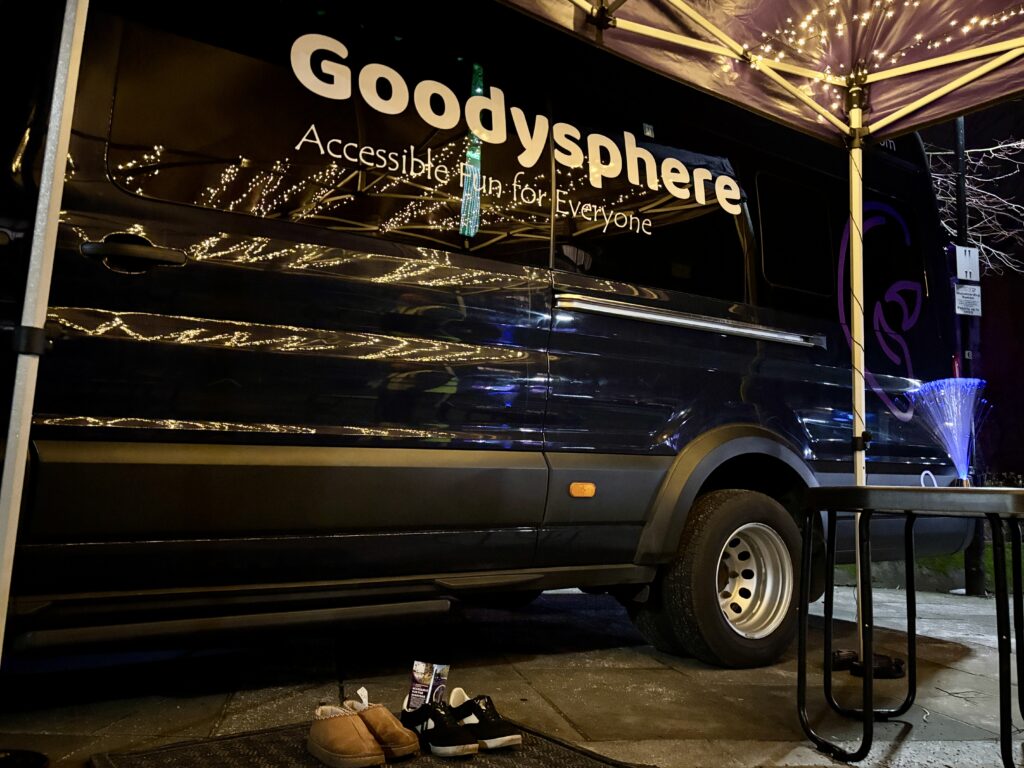
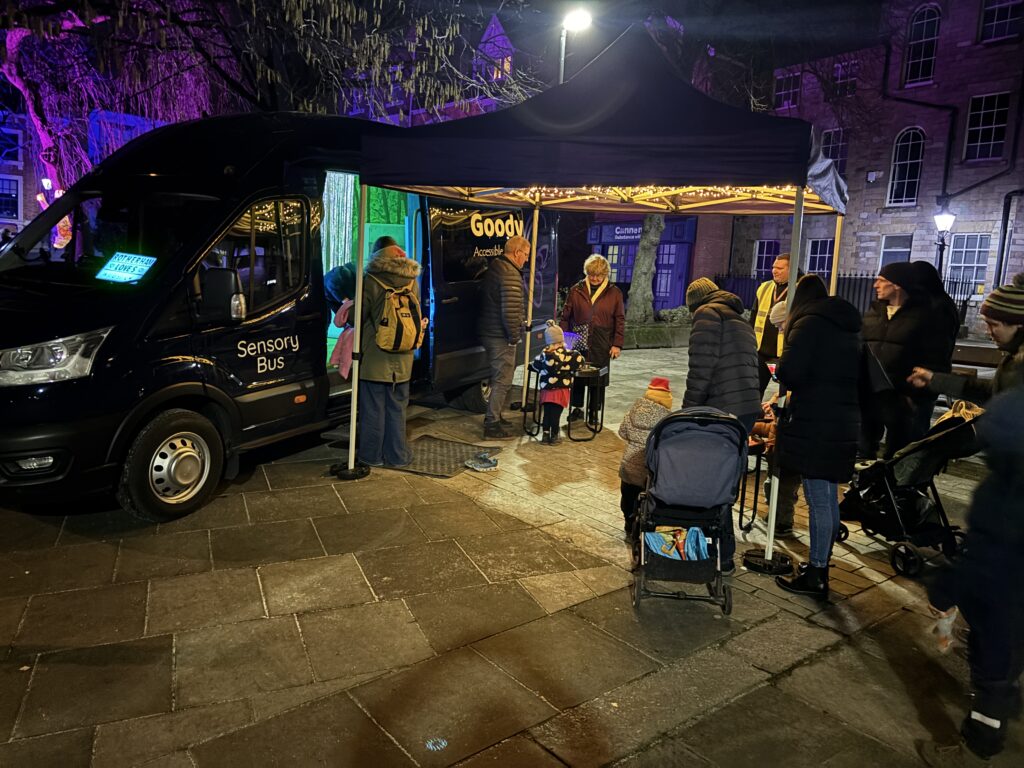
The introduction of a dedicated sensory space fundamentally alters how an event can be experienced. Rather than forcing individuals to choose between enduring an overwhelming environment or leaving altogether, it provides an alternative — a way to pause, regulate, and return when ready. It supports continued participation without compromising wellbeing, allowing people to engage with the event on their own terms.
In practice, the difference is both immediate and measurable.
Attendees who might otherwise have left early are able to remain for longer periods. Individuals and families return to the sensory space multiple times throughout the day, using it as a consistent point of regulation. Perhaps most importantly, people who would not typically attend busy public events begin to do so, confident in the knowledge that there is a supportive environment available if needed.
These outcomes extend beyond accessibility alone. They contribute directly to increased dwell time, improved attendee experience, and a more inclusive and representative audience.
At its core, accessibility is not simply about meeting requirements or demonstrating compliance. It is about ensuring that people are able to participate in everyday experiences without encountering unnecessary barriers.
Events occupy a unique and valuable position within communities. They are spaces for connection, celebration and shared experience. When accessibility is approached in a way that fully considers the range of needs within an audience — including sensory needs — those experiences become genuinely available to more people.
Without that consideration, the exclusion may remain quiet, but it is no less significant.
Increasingly, however, it is also no longer unavoidable.