
Accessibility has become an increasingly prominent consideration within event planning across the UK, with most organisers now recognising both the ethical responsibility and the reputational importance of ensuring their events are open and welcoming to a wider audience. In many cases, this has led to meaningful improvements, particularly in relation to physical access, where step-free routes, accessible toilet provision, clearer signage, and more thoughtful site layouts are now commonly incorporated into event design.
However, despite this progress, there remains a noticeable gap between what is typically implemented and what is actually experienced by attendees on the ground.
An event can meet a range of recognised accessibility standards and still present significant barriers to participation, particularly for individuals whose needs are not immediately visible or easily addressed through structural adjustments alone. This is where the conversation around accessibility begins to shift from compliance to experience, and where many organisers find themselves navigating more complex and less clearly defined territory.
When searching for guidance on how to make an event accessible in the UK, much of the available information understandably focuses on legal requirements and recommended best practice. While this forms an essential foundation, it rarely captures the full scope of what accessibility looks like in practice, particularly when considering the sensory environment that events create.
Accessibility is not experienced as a set of provisions on paper; it is experienced moment by moment, through how an environment feels, how predictable it is, and whether individuals are able to manage their engagement with it over time.
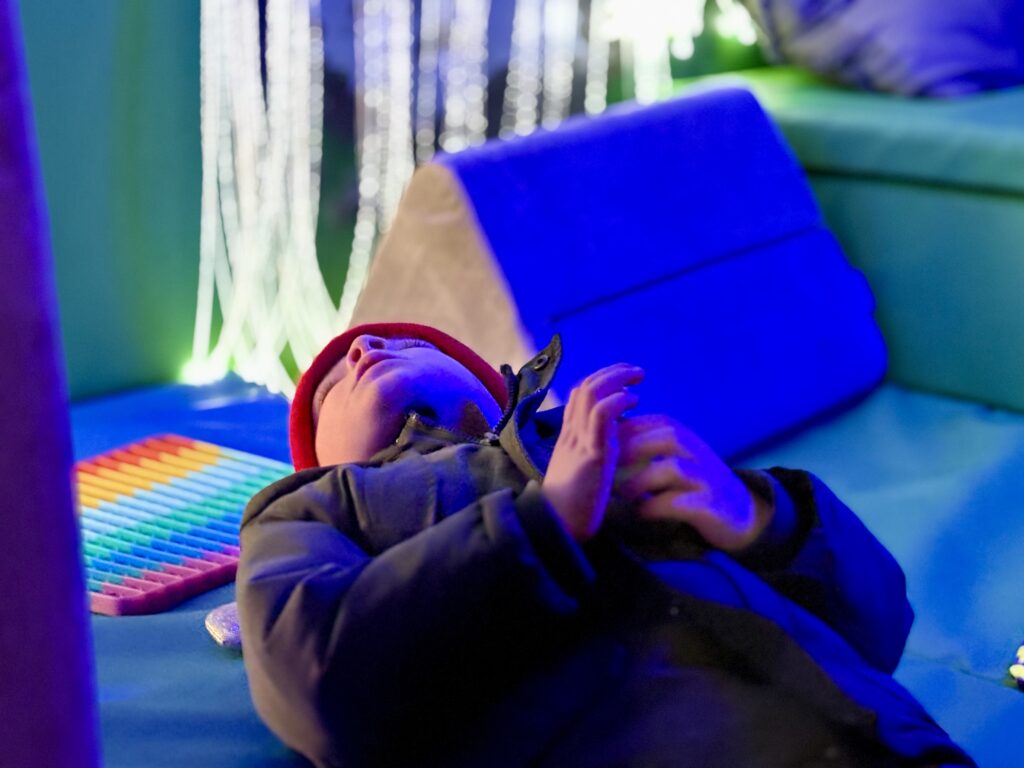
For many people, particularly those with sensory processing differences, neurodivergence, anxiety, or a lower tolerance for high-stimulation environments, the primary barrier is not a lack of physical access, but the intensity and unpredictability of the event itself. Large crowds, competing sound sources, bright or rapidly changing lighting, and a general absence of quieter, controlled spaces can combine to create an environment that becomes increasingly difficult to navigate and sustain.
In these circumstances, the issue is not willingness to participate, but the lack of a viable way to do so comfortably.
Without access to an appropriate space for regulation, the only realistic option often becomes withdrawal, whether that means leaving early or choosing not to attend at all. This is not an isolated occurrence, but a consistent pattern observed across a wide range of public events, and one that has clear implications for both inclusivity and overall event performance.
It is within this context that sensory accessibility must be understood as a fundamental component of inclusive event design, rather than an additional feature to be considered if time or budget allows.
A dedicated sensory space introduces an essential layer of support, providing a controlled, low-stimulation environment where individuals can pause, regulate, and regain a sense of equilibrium before returning to the event. Crucially, this does not remove people from the experience, but instead enables continued participation in a way that is manageable and sustainable.
From an operational perspective, the impact of this provision is both immediate and measurable.
Events that incorporate sensory spaces consistently report increased dwell time, as attendees who might otherwise have left early are able to remain for longer periods. There is often a noticeable increase in repeat engagement throughout the day, with individuals and families returning to the sensory space as needed, using it as a consistent point of regulation within a busy environment. Over time, this also contributes to broader audience reach, as those who may previously have avoided similar events begin to attend with greater confidence.
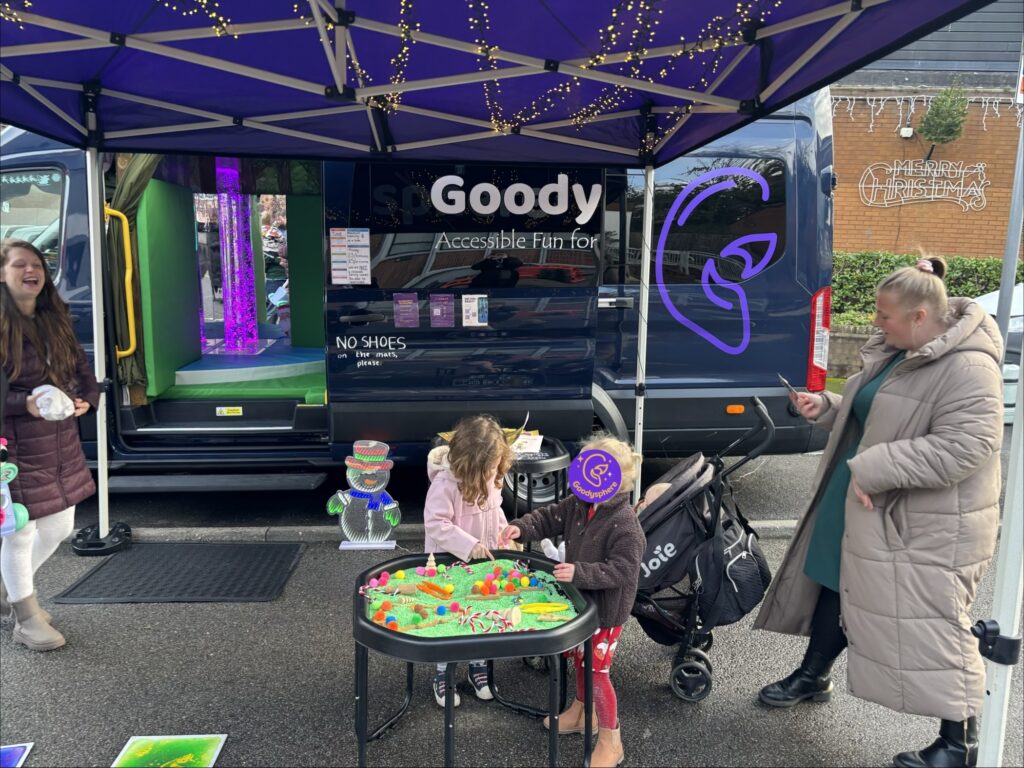
Importantly, the benefits of sensory accessibility extend beyond any single group.
While it plays a vital role in supporting individuals with identified additional needs, it also provides value to a much wider audience, including those who may not formally identify as requiring support but nonetheless experience moments of overwhelm, fatigue, or the need for a quieter space within a high-energy setting. In this sense, sensory provision aligns with a more progressive understanding of accessibility, one that enhances the experience for everyone rather than targeting a specific demographic.
For event organisers seeking to move beyond baseline accessibility and towards genuinely inclusive design, this requires a shift in perspective.
Rather than viewing accessibility as a checklist of required features, it must be considered as an integral part of the overall experience, encompassing not only how people access an event, but how they move through it, respond to it, and sustain their engagement over time.
Mobile sensory spaces, such as the Goodysphere Sensory Bus, offer a practical and adaptable solution within this framework. As fully self-contained sensory environments, they can be integrated into a wide range of event settings without the need for permanent infrastructure, while still delivering a high-quality, immersive and carefully designed space for regulation.
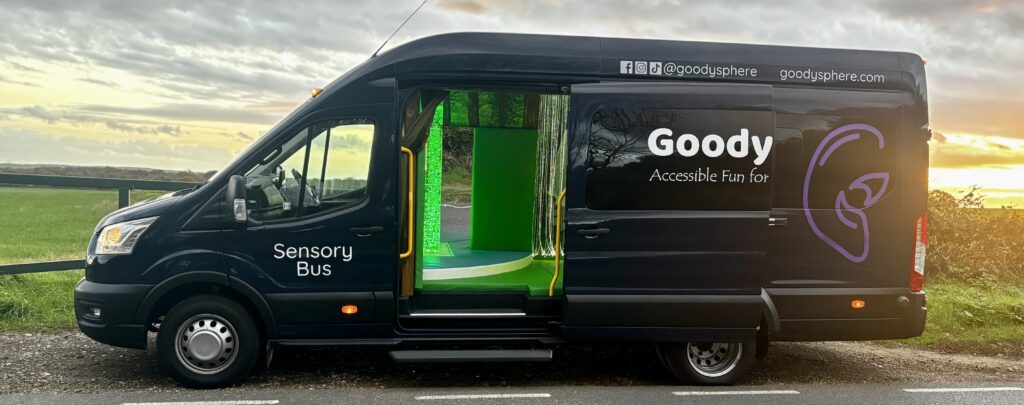
As expectations around accessibility continue to evolve, the question is no longer simply whether an event can be accessed, but whether it can be experienced fully by those attending.
Achieving this requires a more nuanced and experience-led approach to event design, one that recognises sensory accessibility as an essential component rather than an optional addition.
For organisers, this represents not only a responsibility, but a clear opportunity to create events that are more inclusive, more engaging, and ultimately more successful because they are designed to work for a broader and more diverse audience.