
I’m Caleb. I’m autistic. I notice small things. The hum of a light before anyone else hears it. The way a room feels when someone is upset. The tiny changes that tell me something isn’t right.
When my sister Anya died, those same sensitivities didn’t switch off. They turned up.
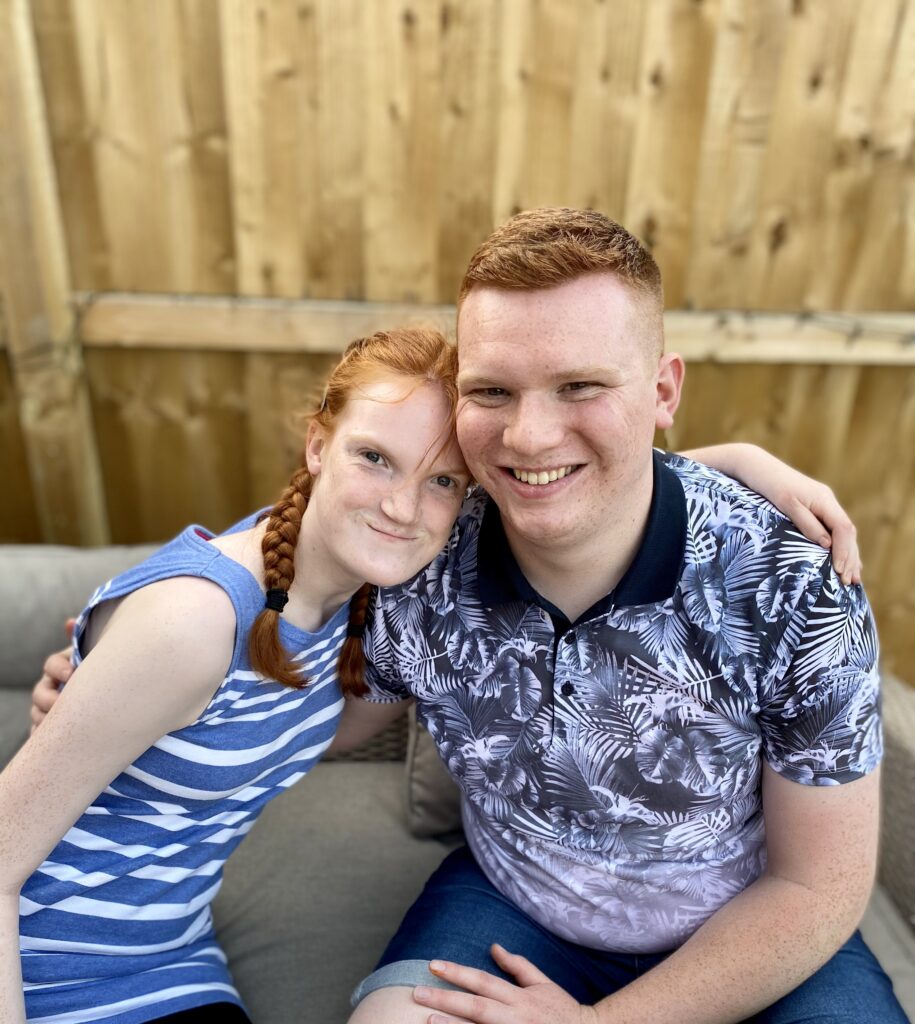
People talk about grief as stages, as something you move through. For me, it was more like standing in a storm that never quite stops. Loud, bright, unpredictable. People expected me to talk, to cry in certain ways, to be comforted in certain ways. But my grief didn’t look like theirs. Sometimes I went quiet. Sometimes I needed to repeat memories out loud. Sometimes I couldn’t be touched. Sometimes I needed the same story told again and again because routine felt like safety when everything else was broken.
Autistic grief can be misunderstood. People think silence means we aren’t feeling. They think routines are avoidance. They think questions are cold. The truth is we can feel everything at once. The details. The absence. The change. The way the world keeps moving when our person isn’t in it anymore.
I remember noticing the smallest things about Anya after she was gone. The biscuits still in the cupboard that would normally be gone in seconds. The giggle that wasn’t in the hallway anymore. The ice cubes sat in the freezer not scattered all over the floor. Those details didn’t fade quickly. They still haven’t. They sit with me like quiet echoes.
I struggled with words. Not because I didn’t care, but because my brain was trying to process something that had no pattern, no logic, no rule I could follow. Loss breaks the rules. And autistic people often rely on rules to understand the world. When those rules disappear, it can feel like falling.
Some people tried to help by saying things like “time heals” or “she’s in a better place.” They meant kindness, but what I needed was something else. I needed patience. I needed space to talk about Anya without people changing the subject. I needed someone to sit beside me quietly. I needed the world to slow down for a minute.
Grief changed how I see accessibility. Before Goodysphere existed, I was already noticing how overwhelming spaces could be. After Anya, it became personal. I saw families leaving events early. I saw parents apologising because their child was overwhelmed. I saw people who needed calm spaces but didn’t have them.
I kept thinking about how grief feels in a busy, loud world. How impossible it can be to regulate when your heart is broken and the lights are bright and the music is loud and everyone expects you to be okay.
That is part of why Tabitha and I built Goodysphere.
Inside our rainforest sensory bus, there is a bubble tube that glows softly. There is a fibre optic waterfall that feels like quiet rain. There is a sensory swing where people can breathe for a minute. There are mirrors and sequin boards that catch light gently instead of harshly. It is not just for children. It is for anyone who needs a moment to feel safe in their body again.
Every time someone steps onto the bus and their shoulders drop, I think of Anya. Every time a parent says, “We could stay because of you,” I think of her. Every time someone who is autistic or overwhelmed finds a calm place in the middle of a busy event, I know we are keeping a promise.
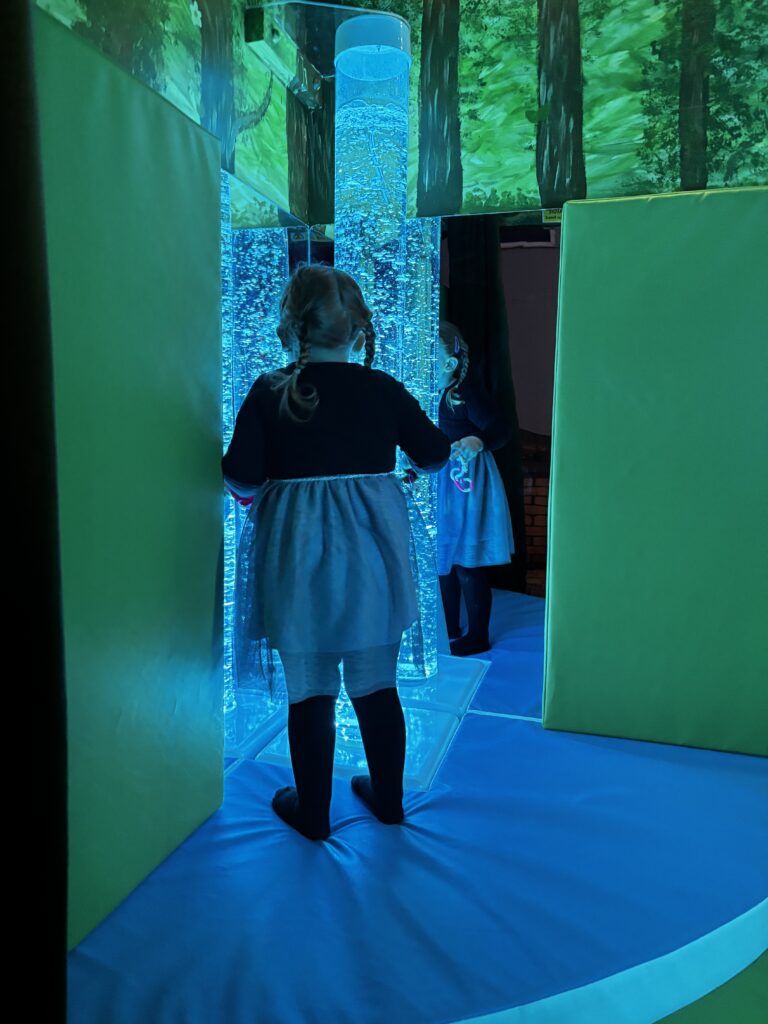
Grief never left me. It changed shape. It became something I carry into the work we do across Sheffield, Rotherham, Doncaster, Yorkshire and beyond. It became kindness when someone needs more time. It became understanding when someone can’t explain what they feel. It became a quiet promise that no family should feel pushed out of ordinary moments because life is already hard enough.
If you love someone who is autistic and grieving, please remember this. We might not show grief the way you expect. We might talk about details. We might need routine. We might seem distant. But inside, we are feeling everything.
Sit with us. Listen. Let us remember our person out loud. Don’t rush us.
Anya is part of Goodysphere. She is part of every sensory session. She is part of every calm moment we help create.
And in those quiet moments, in the glow of a bubble tube, in the gentle sway of the sensory swing, I feel close to her again.